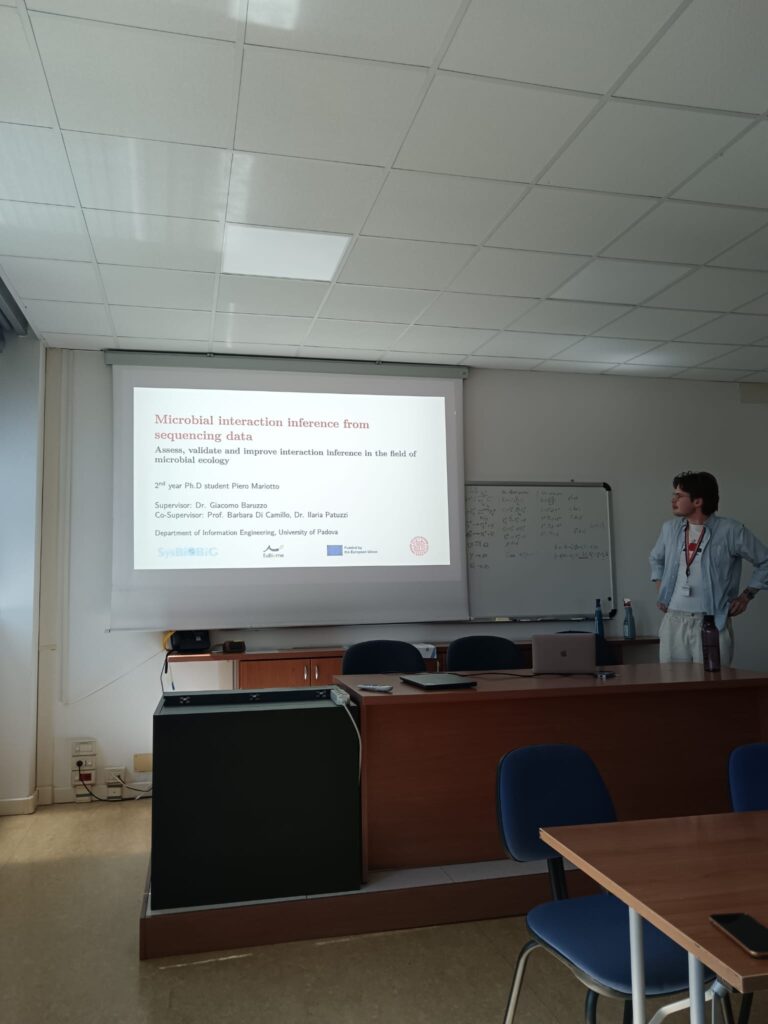
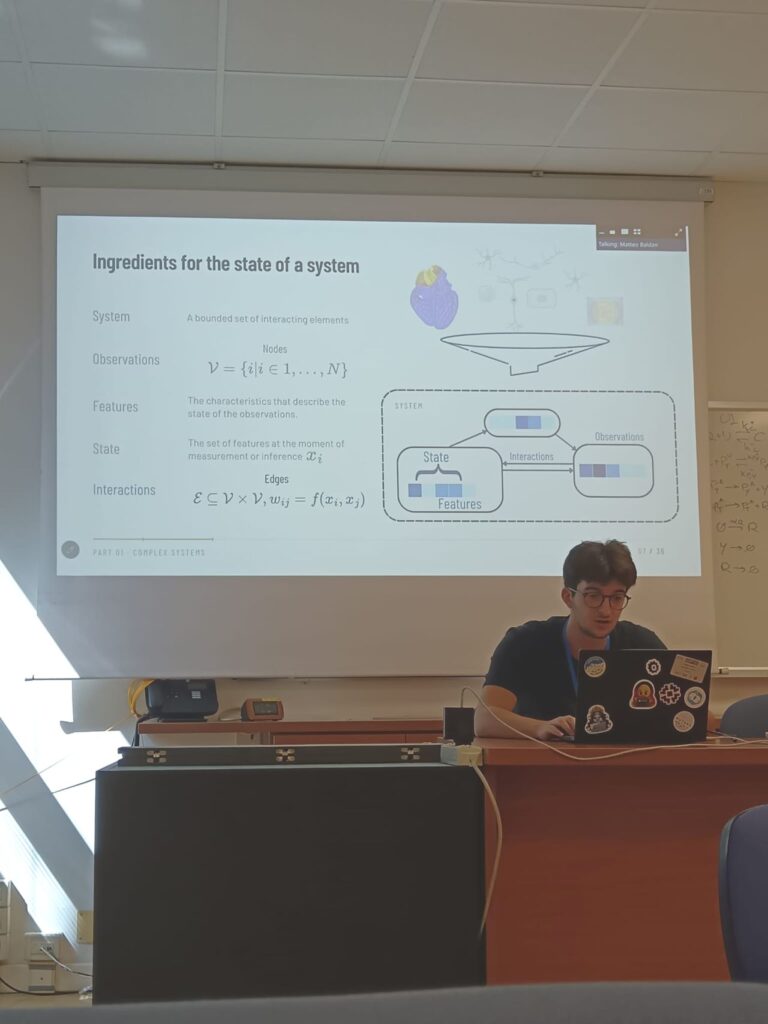
Bioinformatics seminars @ University of Parma
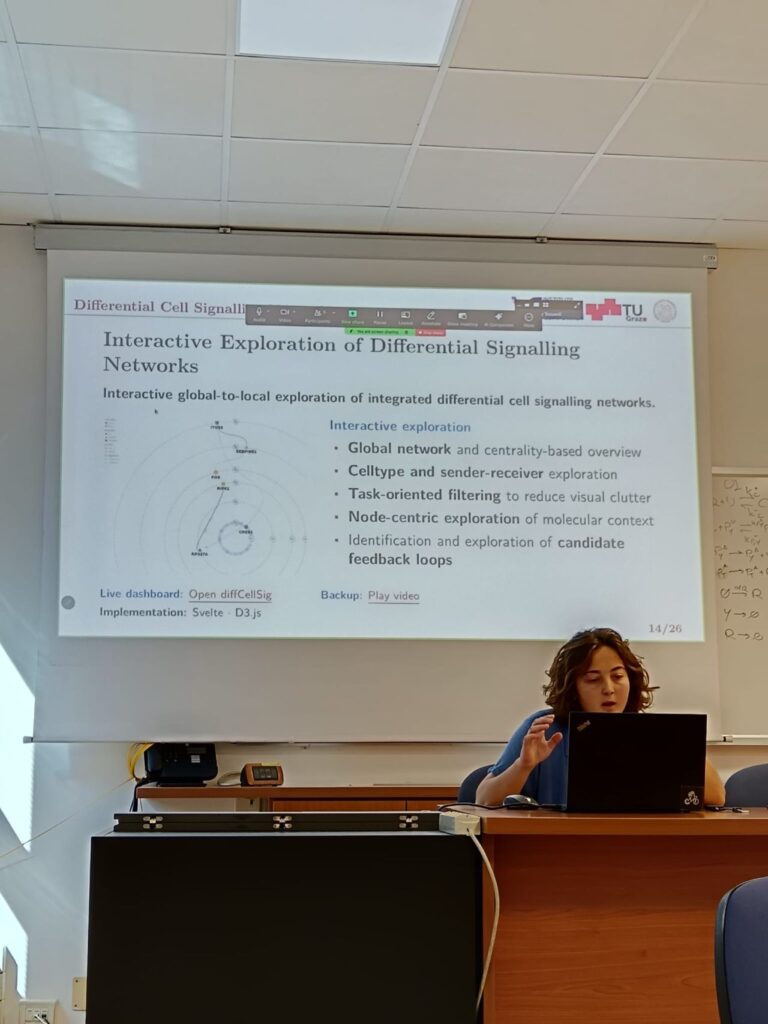
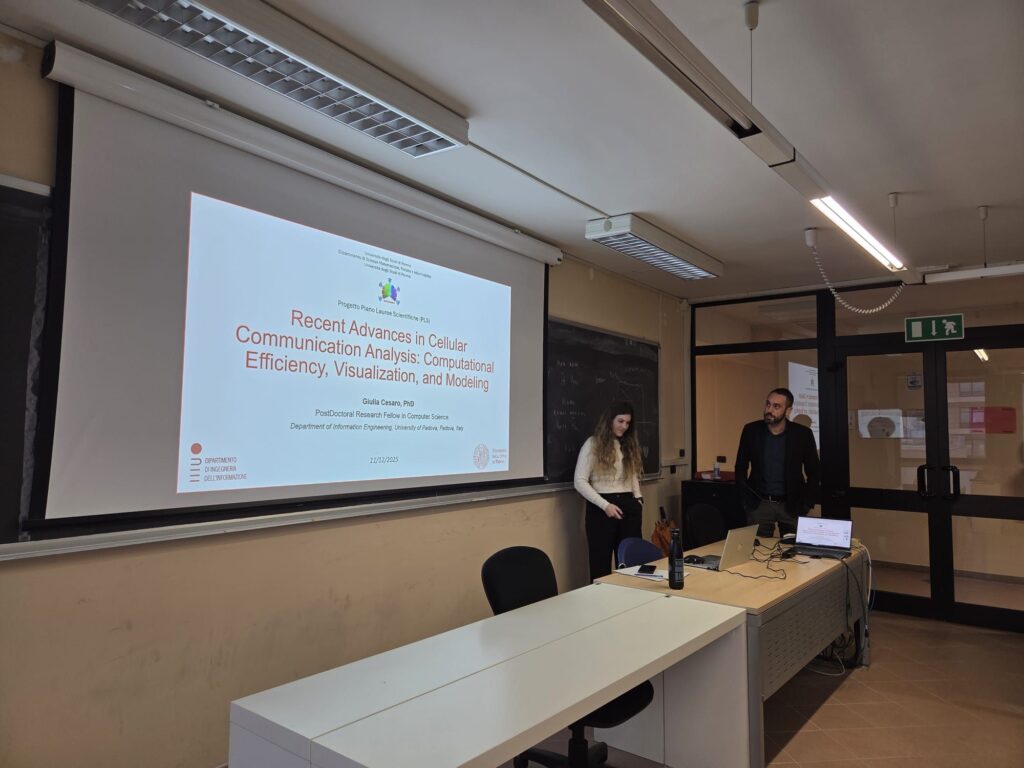
🎙️ ✨ Last week, Giacomo and Giulia were invited to give a seminar at the Department of Mathematical Physical and Computer Science of University of Parma, where they presented the current bioinformatics research of our group.
The talks showcased our efforts to advance computational modelling of cell-cell communication, ranging from our 📔 work providing a comprehensive overview of the field (Briefings in Bioinformatics, 2025) to the presentation of our tools:
– 🧬scSeqComm (Bioinformatics, 2022) and scSeqCommDiff (NAR Genomics & Bioinformatics, 2025) for inferring cellular interactions
– 💻 quickSparseM (IEEE Proceedings of PDP 2025) for time- and memory-efficient computation on large, sparse omics matrices,
– 📊 CClens (NAR Genomics & Bioinformatics, 2025) for intuitive visualization and interpretation of multidimensional cell-cell communication results
– 📈 MAST (Bioinformatics Advances, 2022) for modeling tumor–immune dynamics across time and space using an hybrid multi-agent model
It was a great opportunity to share our recent progress, exchange ideas, and engage in stimulating discussions.
We warmly thank Professor Vincenzo Bonnici for the invitation and for organizing this seminar series at the Università degli studi di Parma.


Longhin F, Baruzzo G, Hazizaj E, Boscarino D, Paladin D, Di Camillo B. MOV&RSim: computational modelling of cancer-specific variants and sequencing reads characteristics for realistic tumoral sample simulation. BMC Bioinformatics 2025
New article on realistic tumoral sample simulation published in BMC Bioinformatics!
🚀 We’re excited to share that our latest paper is now published in BMC Bioinformatics: MOV&RSim: computational modelling of cancer-specific variants and sequencing reads characteristics for realistic tumoral sample simulation, https://doi.org/10.1186/s12859-025-06292-0
📊 We developed MOV&RSIM, a novel simulator that leverages data-driven information to set variants and reads characteristics, producing realistic tumoral samples, and providing full control on biological and technical parameters. Additionally, we leveraged well-annotated variant databases to create cancer-specific presets that inform the simulator’s parameters for 21 cancer types.
🔍 The proposed simulator and presets represent the most adaptable and comprehensive computational framework currently available for generating tumor samples, enabling comprehensive benchmarking and, ultimately, the optimization of somatic variant callers across diverse cancer types.
👥 This research is the result of a collaboration between our group and AB ANALITICA srl. Congratulations to the first author, Dr. Francesca Longhin, who developed MOV&RSim during her doctoral studies in our research group!
🔗 The tool is freely available on gitlab at: https://gitlab.com/sysbiobig/movarsim
New article published on IEEE Access
We are pleased to announce the publication of our latest paper, “Validity of Feature Importance in Low-Performing Machine Learning for Tabular Biomedical Data”
in IEEE Access: 10.1109/ACCESS.2025.3618851
🔍 This study investigates how machine learning (ML) performance affects the validity of feature importance in biomedical datasets.
While high model accuracy is often considered a prerequisite for interpreting feature importance, this assumption has rarely been examined. In this work, we challenge this notion by showing that even low-performing models can provide reliable feature importance in biomedical contexts.
🖥️ We developed an experimental framework to assess the stability of feature importance, finding that performance degradation due to a limited number of samples behaves as conventionally expected, reducing validity, whereas degradation caused by a limited number of features preserves the validity of feature importance to a much greater extent.
👥 This research is the result of a collaboration between our group, Georgia Institute of Technology and Seoul National University. Congratulations to the first author, Dr. Youngro Lee, who was a visiting Ph.D. student in our group during his doctoral studies at Seoul National University. Great job, Youngro!
Lee Y, Baruzzo G, Kim J, Seo J, Di Camillo B. Validity of Feature Importance in Low-Performing Machine Learning for Tabular Biomedical Data. IEEE Access 2025
CONVECS @ HPCSIM2025
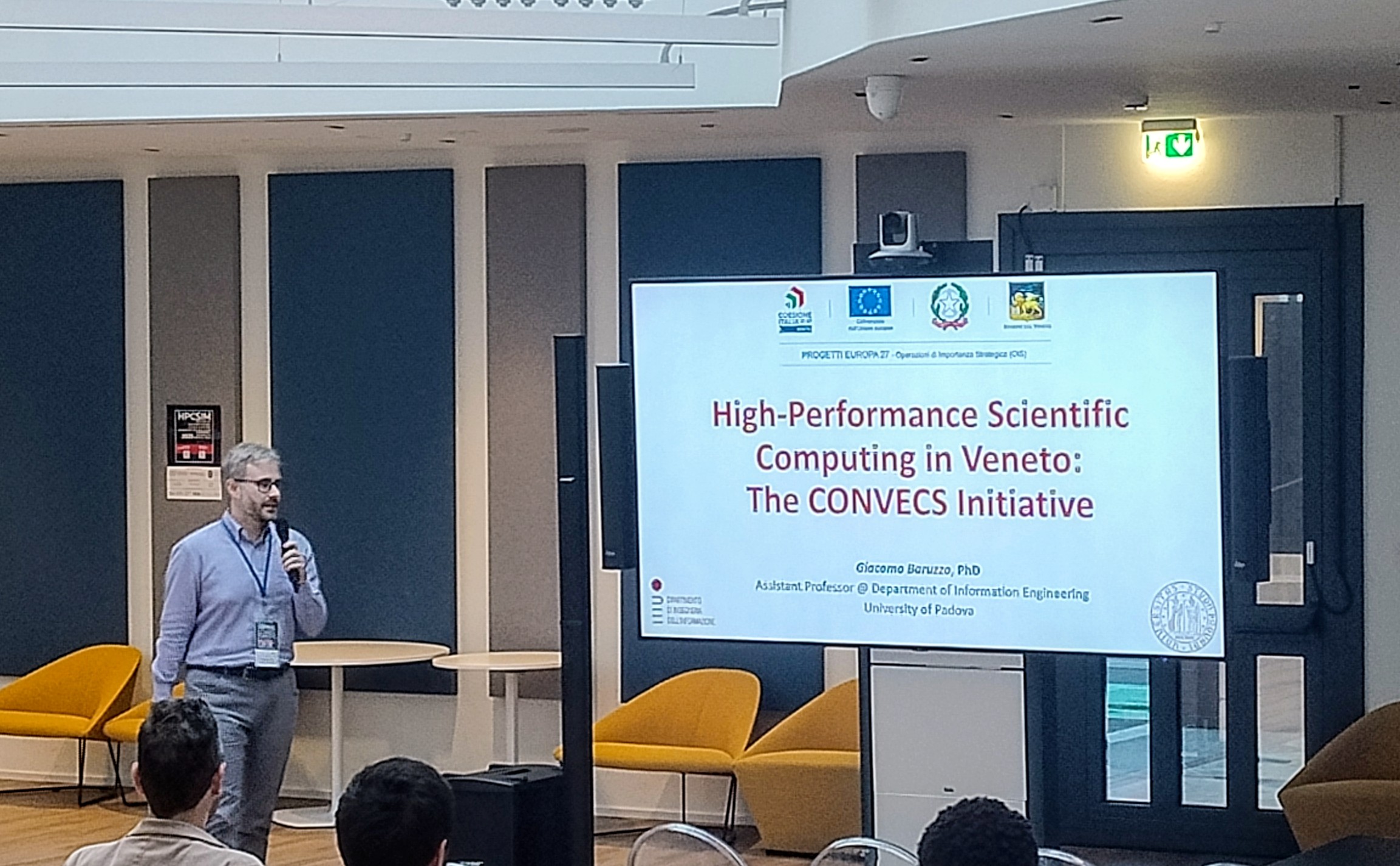
Last week, Giacomo attended HPCSIM25 – Frontiers of High-Performance & Cloud Computing in Modeling and Simulation, held in Padova, Italy, on September 11–12, 2025.
The event focused on the latest methodologies and technologies in the field of High-Performance Computing (HPC), offering researchers and practitioners an overview of the current landscape and future directions of HPC in both real-world applications and scientific research.
Giacomo delivered an oral presentation titled “High-Performance Scientific Computing in Veneto: The CONVECS Initiative”, introducing the CONVECS project (COmuNità VEneta per il Calcolo Scientifico) where he is responsible for leading multiple core tasks. This initiative, recognized as an Operation of Strategic Importance by the Veneto Regional Government, aims to enhance, consolidate, and interconnect the HPC infrastructures currently available across universities and research laboratories in the Veneto region. Its goal is to create a unified, scalable computing environment accessible to both academic researchers and technology-driven enterprises, driving measurable impact in science, industry, and society.

Sysbiobig @ISMB/ECCB 2025
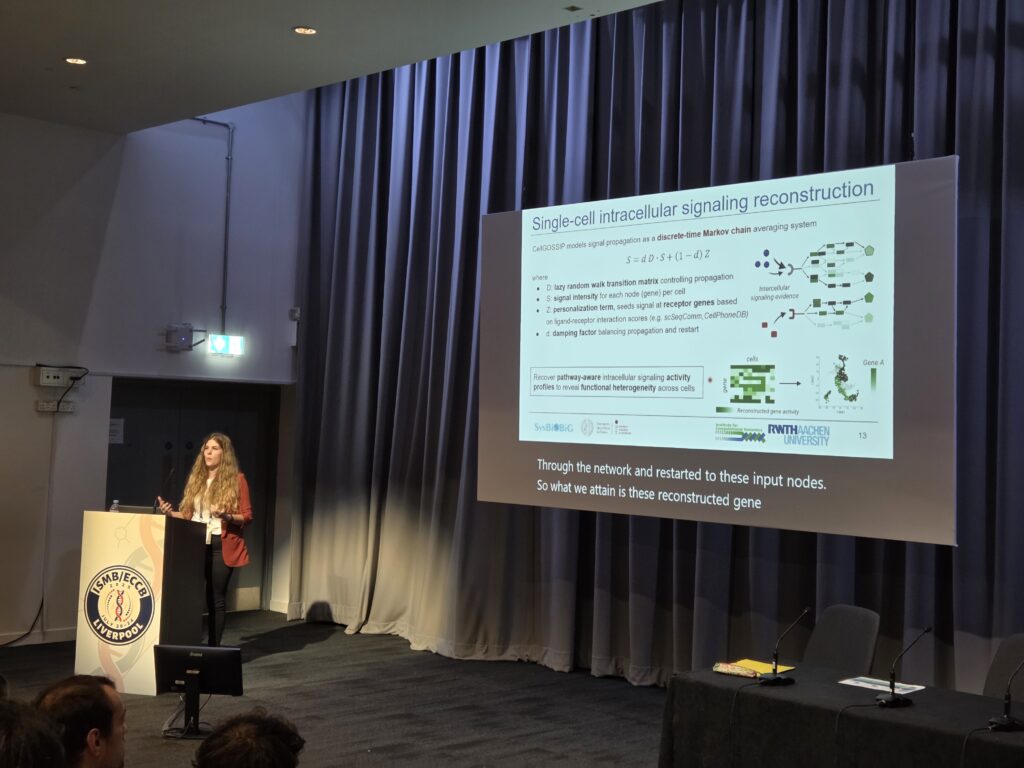
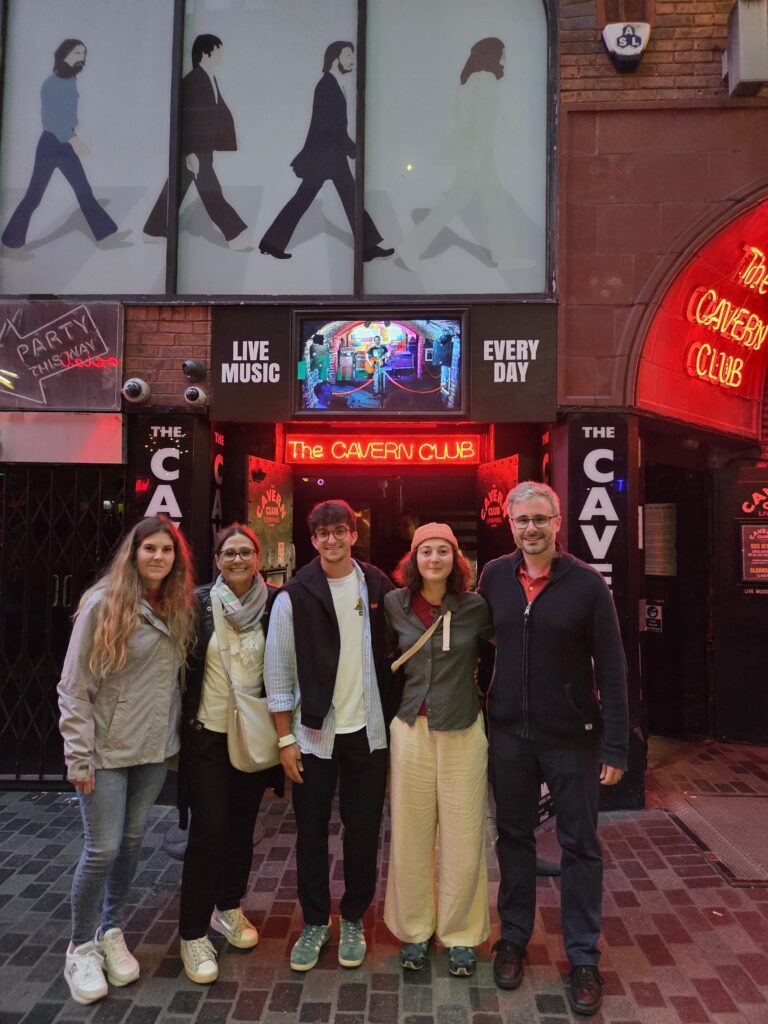
Last week, Barbara, Giacomo, Giulia, Gaia, and Matteo attended the 33rd Conference on Intelligent Systems for Molecular Biology & 24th European Conference on Computational Biology (ISMB/ECCB 2025), held in Liverpool, UK, from July 20–24, 2025.
The conference was a valuable opportunity to attend cutting-edge presentations, engage in discussions on the latest advances in bioinformatics, and foster new collaborations.
We’re proud to share that our group contributed to the scientific program with several presentations:
- Giulia Cesaro delivered an oral presentation in the NetBio session titled “Cell-specific Graph Operation Strategy on Signaling Intracellular Pathways” showcasing work done in collaboration with the CostaLab at RWTH Aachen University.
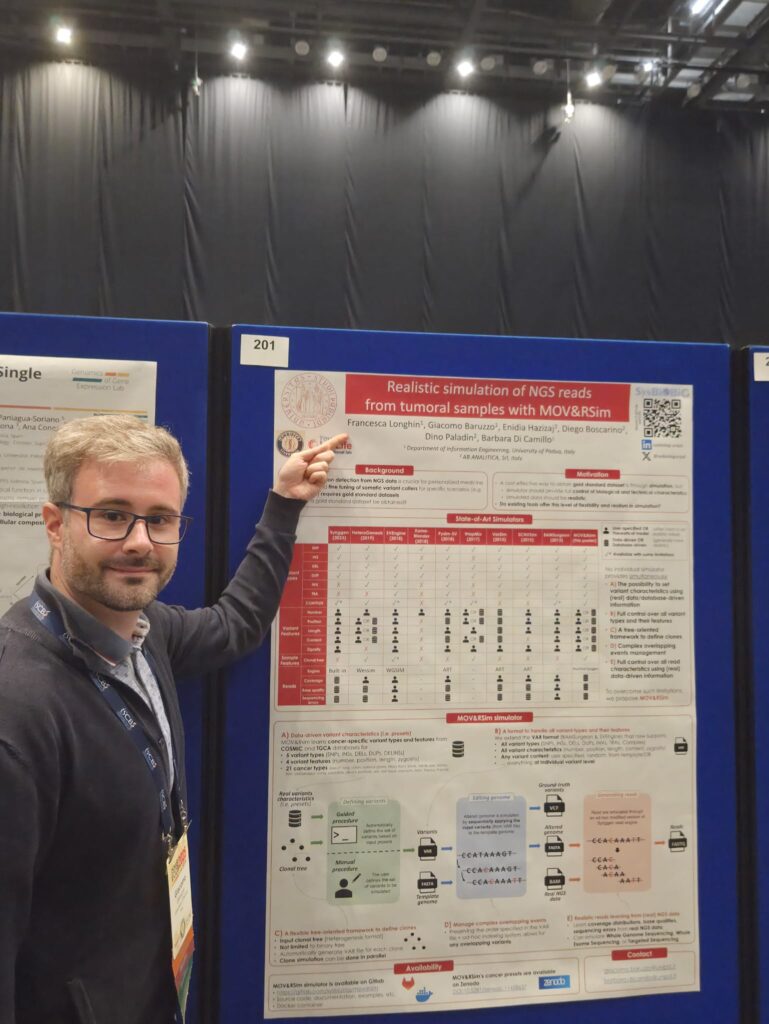
- Giacomo Baruzzo presented the poster “Realistic Simulation of NGS Reads from Tumoral Samples with MOV&RSim”, a project led by Francesca Longhin (former PhD student of our group), in collaboration with AB Analitica.
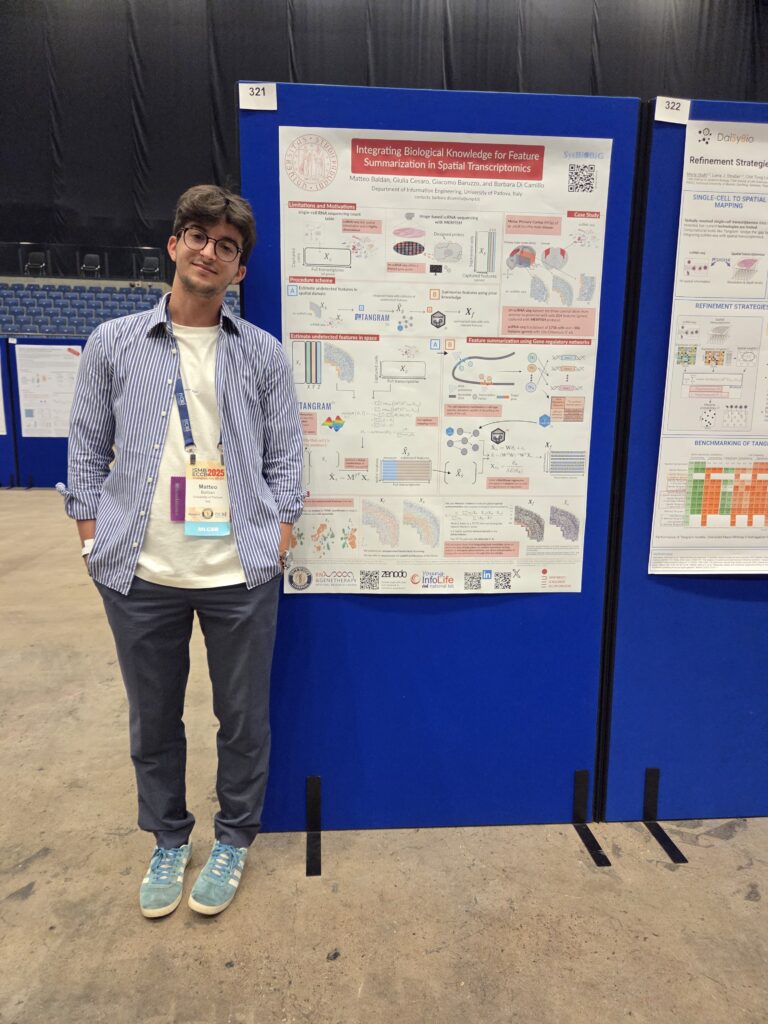
- Matteo Baldan presented the poster “Integrating Biological Knowledge for Feature Summarization in Spatial Transcriptomics”.
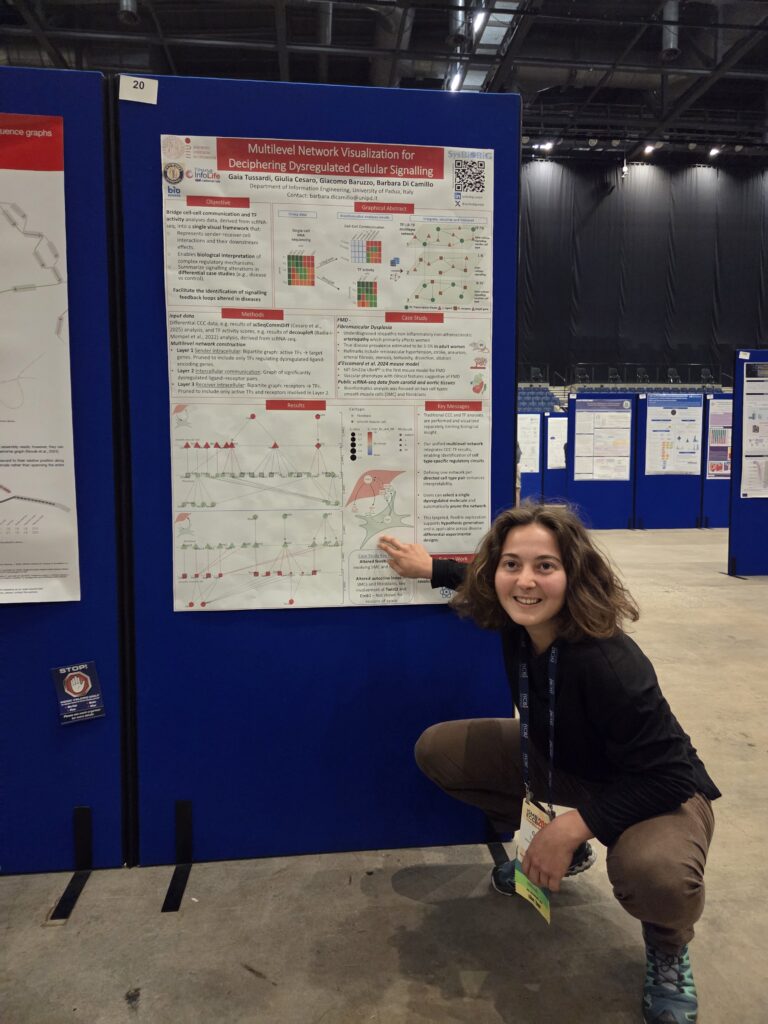
- Gaia Tussardi presented the poster “Multilevel Network Visualization for Deciphering Dysregulated Cellular Signalling”.
- In collaboration with the CostaLab at RWTH Aachen University, we also co-organized the tutorial “Computational Approaches for Deciphering Cell-Cell Communication from Single-Cell and Spatial Transcriptomics Data”.


Baruzzo G, Cesaro G, Di Camillo B. quickSparseM: a library for memory- and time-efficient computation on large, sparse matrices with application to omics data. Proceedings of the 33rd Euromicro International Conference on Parallel, Distributed, and Network-Based Processing (PDP) 2025
Sharing Our Research in High Performance Computing applied to Bioinformatics at PDP 2025 & Best Paper Award!
Last week, Giacomo attended the 33rd Euromicro International Conference on Parallel, Distributed, and Network-Based Processing (March 10-12, 2025 – Turin, Italy).
It was a great opportunity to attend insightful talks and engage in discussions about the present and future of high-performance computing!
We are also proud to share that our work, “quickSparseM: a library for memory- and time-efficient computation on large, sparse matrices with application to omics data” by Giacomo Baruzzo, Giulia Cesaro, and Barbara Di Camillo, received the Best Paper Award in the “High Performance Computing in Modelling and Simulation” session. The article will soon be available in the conference proceedings on the IEEE website (https://www.computer.org/csdl/proceedings/1000543).
We extend our sincere thanks to the conference and session organizers for hosting this event and giving us the opportunity to present our research!